Jeremy Keith – beyond tellerrand Podcast
On events, community, and why we keep doing this
I recently sat down with Jeremy Keith for a spontaneous conversation that quickly turned into a deep dive into something we both care a lot about: events, community, and why we keep putting ourselves through the joy and pain of running conferences.
Jeremy has been organising events for almost as long as he’s been part of the web industry with/for Clearleft. dConstruct, UX London, Leading Design, Responsive Day Out, Patterns Day, Ampersand and many of these formats grew out of one another. dConstruct, which started as a web conference in 2005, eventually became something much more abstract and interdisciplinary. That made it special, but also increasingly hard to “sell”, especially to companies looking for clear ROI. In contrast, more focused events like UX London were easier to justify from a business standpoint, and that difference ultimately shaped which events survived.
We chatted a lot about the contrast between big, high-risk conferences and small, one-day community events. The larger events come with big costs, big expectations, and real financial pressure. The smaller ones are lighter, cheaper, and driven almost entirely by curiosity and passion. They’re not about being polished or profitable in the first place. They’re about getting people in a room who care about the same thing at the same moment in time.
That “moment” is usually the real trigger. Responsive design. Design systems. Web typography. Browser capabilities today. Jeremy described it as “smelling something in the air”, which means that something is happening and wanting to create a space where people can explore it together. Often, these events act as a form of group therapy: realising that you’re not alone, that nobody has it fully figured out, and that struggling is part of the process.
We also agreed strongly on the value of cross-disciplinary events. No separate design and development tracks. No forcing people to choose between rooms. Some of the most valuable moments at conferences happen when designers listen to developer talks, or developers suddenly discover they care about typography, art, or history. That’s something I’ve always believed in with beyond tellerrand and something Jeremy clearly values too.
Of course, we didn’t avoid the difficult topics. Running events has become harder in recent years. Costs are up, sponsorship is harder to secure, and ticket sales have shifted dramatically since COVID. People now buy tickets much later, which makes planning stressful and risky. Several events have disappeared because of that uncertainty.
Another big challenge is reaching younger and/or new audiences. Social media reach is fragmented, algorithms are unforgiving, and many younger people don’t discover events the way we did. And yet, whenever younger or new attendees do come for the first time, the reaction is almost always the same: “This is amazing. Why haven’t I done this before?”
The challenge isn’t the experience, it’s getting them through the door the first time.
We also touched on attention spans, formats, and why breaks matter just as much as talks. Conferences aren’t only about what happens on stage. They’re about the conversations in between, the time to digest ideas, and the human connections that simply don’t happen on Slack, YouTube, or social media.
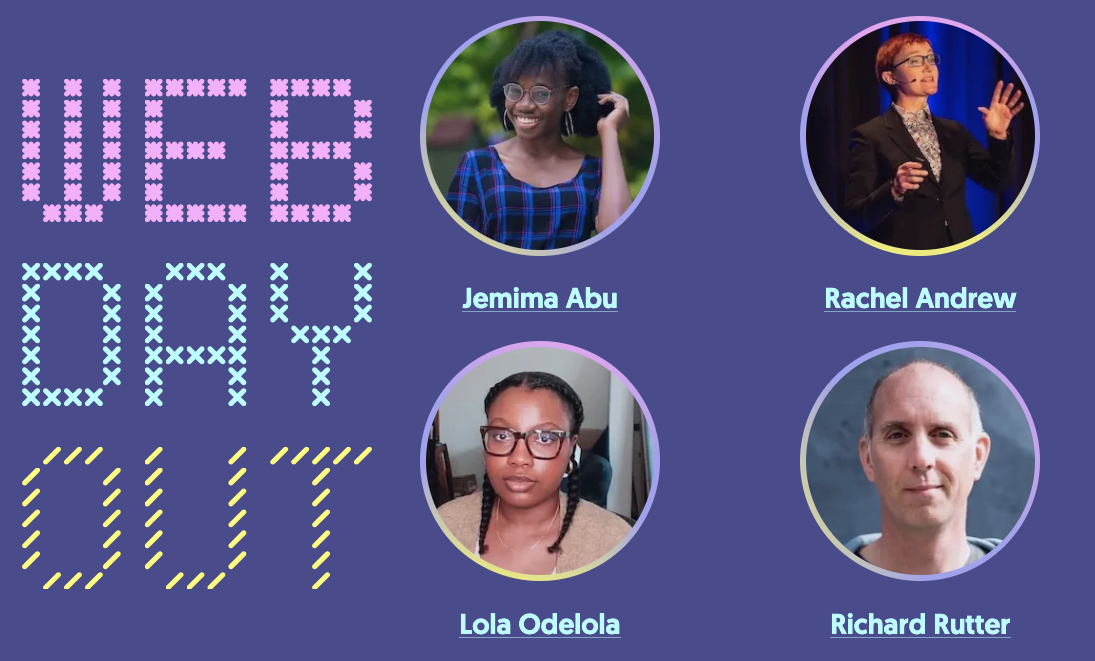
Towards the end, Jeremy talked about his upcoming event Web Day Out (12 March in Brighton). A one-day, “cheap and cheerful” event focused on what browsers can do right now. Well-supported HTML, CSS, and JavaScript features you can use on Monday morning. Less framework obsession, more confidence in the web platform itself. It’s very much in the spirit of those earlier one-day events like Patterns Day or Responsive Day Out: shorter talks, shared excitement, and people leaving energised rather than overwhelmed.
What stayed with me after this conversation is something I’ve felt for a long time and repeatedly said (and won’t get tired to):
Events are not just about learning tools or frameworks. They’re about inspiration, confidence, curiosity, and community. They remind us why we got into this industry in the first place.
And honestly? That’s reason enough to keep doing it. ;)
Podcast (Audio-Only) Version
Full Transcript of this Episode
Marc (00:01)
Hello, hello! Today I welcome someone who's actually dear to my heart. It was a spontaneous idea we had yesterday when updating each other via text messages. The person I'm talking about is quite known in the web industry. He has spoken at many editions of beyond tellerrand and countless other events of course. But he's also a fellow event organiser. Good morning, Jeremy Keith.
Jeremy (00:29)
Good morning, Marc Very good to talk to you today.
Marc (00:34)
How have you been? Like the last...
Jeremy (00:37)
Not too bad.
I've had a bit of a cold, but that's par for the course in this weather. So yeah, I'm okay. I'm all right.
Marc (00:47)
Okay, well, yesterday when we chatted, I thought about like, actually have we met last time? Because sometimes it is you meet like every other week and you think like, well, okay, I meet Jeremy in two weeks again, whatever. But then sometimes you don't meet for whatever ages, like a year or something. Have we met at all last year? I think in Brighton once, Have we? Was it last year or was it the year before actually already?
Jeremy (01:06)
Yeah.
Um, I think
it might've been the year before. No, it was last year. was last year. Uh, research by the sea. Were you that? No. Or was it FFConf maybe, but FFConf 2024? Yeah, that was 24. Or was it at State of the Browser in London? Maybe State of the Browser. Yeah. Okay. That's what it was. Yeah.
Marc (01:16)
Right?
could be. No, I haven't been there, no? I think that was the year before. That was 2024. So, have we met?
Yes, yes, we met there. See, we met last year,
at least once. Are you then attending or speaking at a lot of events these days?
Jeremy (01:40)
Yeah, at least, yeah. It's been too long,
⁓ no, to both actually, funnily enough. it's funny cause if you look at my, my own website, I've got a page for, you know, my upcoming speaking and past speaking, and you can see how it's changed in the past few years. used to be speaking at a lot more events and these days, I tend to be hosting the event, but not speaking at the event or sometimes other people get me to come and host, which I really enjoy. really love that.
Marc (02:01)
Mm-hmm.
Okay.
Jeremy (02:19)
I'm very occasionally going to just attend an event, know, some the events that I love. ⁓ But even then, not as much as I used to. ⁓
Marc (02:20)
Yeah, I know that.
I people are surprised if you... Yeah,
I bet people are surprised if they meet you at some event and you go like, well, I'm just attending. And they go like, are we what? Yeah, cool. ⁓ Yeah. I mean, talking about events, that is something we definitely have in common, like attending, speaking, but also organising events, right? I mean, the first one I think I've ever seen you in the kind of organiser role was deconstruct. And that must have been...
Jeremy (02:36)
Exactly.
Yeah.
Yeah.
Marc (02:57)
2009 or 10 maybe, don't remember really the year, but somewhere around then it must have been in Brighton. I remember that it was at least, I remember that it was the edition where everybody told me, you should have gone before when it was the web conference.
Jeremy (03:14)
Yeah, change. So it's funny, funny because clear left turned 20 years old last year in 2025, which is a really long time for an agency to to just survive. But what I think is even more unusual is that.
Marc (03:15)
So.
Mm-hmm.
Jeremy (03:31)
We've been doing events that long as well. In other words, the first year we formed as an agency, it was just three people, was also the first year we put on our own event, with not having a clue what we were doing. And that was deconstructed. The first event we did was in 2005. It wasn't quite the first web event in the UK because at Media had already happened that year. And this would maybe be the second.
Marc (03:42)
Really already?
Mm-hmm.
Jeremy (03:59)
Yeah, it was all very last minute. was all by the skin of our teeth, just figuring out what to do. It was a small event, just 100 people. But there was clearly an appetite. that became an annual thing. And you're right, it's funny, because to begin with, was just like, let's talk about whatever we can. Ask all our friends who could give a talk. And of course, there was a lot of web stuff, a lot of quite nerdy front end stuff, which is great.
Marc (04:10)
Yeah, OK.
Jeremy (04:28)
But then what happened was over the next few, like, so 2006, seven, eight, nine, more more conferences started happening in the UK and kind of covering similar territory.
Which on the one hand, we're like, ⁓ you know, that's what we were doing. But on the other hand, it's an opportunity for us to maybe pivot deconstruct a bit. Like, well, why don't we talk about the stuff that nobody else is talking about? And that's when it started to get a bit more cerebral or philosophical and, you know, just like come to deconstruct and you'll have an interesting time. You know, it's not maybe not the kind of thing your boss would send you to, but you definitely have an interesting time. And there was a year definitely where
Marc (04:57)
Yeah.
Jeremy (05:08)
We didn't communicate that change to people. So people who had been coming and enjoying the technical stuff showed up one year and there wasn't much technical stuff and it was all this abstract stuff. Yeah.
Marc (05:12)
Mm-hmm. Yeah.
Yeah, I mean,
since that was my first one, I pretty much enjoyed it. mean, hence I run beyond tellerrand, not because of deconstruct, but like the idea of ⁓ my intention of running events is like bridging the gap between disciplines and all that kind of stuff. But yeah, well, yeah, for me it was quite nice. But funny enough, the feedback from the people at the event then to me was, you should have been here when it was a web conference. That was the days and stuff.
Jeremy (05:29)
Yeah.
Yeah.
Marc (05:47)
But I thought,
it's actually quite nice to. So you were actually, how do you say, an early adopter of these multidiscipline events and thinking outside the box and this kind of stuff? ⁓ Well, yeah.
Jeremy (05:58)
Yeah, deconstruct was definitely
unusual at the time. Yeah. When it became that event. I mean, it has to be said then, you know, it was successful for a good few years, but over time it became really hard to sell that proposition. You know, like you're not going to learn about tools.
Marc (06:15)
Do
you think that was the reason? Or was it more like one of the first dips of events and conferences in general?
Jeremy (06:27)
I think it was probably the subject matter. It's just hard to sell it. ⁓ Particularly if you're gonna try and convince your boss to send you to something. It's pretty tough to say. You know what I mean. Yeah, yeah, you know exactly what I mean. ⁓ Because we started running other events that were more focused and were maybe an easier sell for your boss, right? ⁓ But what's interesting is those events kind of all spun out of each other.
Marc (06:30)
Mm-hmm.
Well, yeah, I know that problem, to be honest.
Jeremy (06:57)
Deconstruct, there was a year where we did a heavy UX focus, and this was in the very early days of kind of UX. But we had people like Jared Spool and Peter Mierholz and all those people. And that year, I can't remember what year it was, but that year was very successful. And people were like, yes, this is good. We like this. And we thought we could just turn deconstruct into a UX event. We were actually, no, deconstruct is its own thing. It's got this kind of weird special vibe. Let's not change that.
Marc (07:13)
Hmm?
and
Jeremy (07:27)
But why don't we start another event just for the UX stuff? And that's where UX London came from. Yeah, UX London now is 16 or 17 years, I want to say. Yeah. Yeah, yeah. I mean, it's changed. It's morphed over time. But in some form or another, it's been running that long. So that kind of came out of deconstruct. And then.
Marc (07:33)
is that running that long as well as already?
wow, I didn't know that. I thought I was younger.
Hmm?
Jeremy (07:56)
Another event came out of that. So what happened was a few years into UX London, we'd be at the event, we're chatting to the attendees, and we noticed this pattern, which is like the amount of people who were saying to us, help, I've been promoted. Like, I'm a designer, but I've been promoted to be like a manager, I'm supposed to be leading a team of designers, and I have no idea what I'm doing. And we thought, okay, well, again, we could change UX London to focus on, you know, design leadership.
We thought, no, no, let's spin out another event. And so that's where leading design came from. So it's like leading design came from UX London, which came from deconstruct. Like they all kind of came out of one another, or splintered off from one another.
Marc (08:26)
Mm-hmm.
Yep.
Yeah.
Yeah, and then deconstruct slowly faded away. And you did the last one a couple of years ago, right? Yeah.
Jeremy (08:45)
Yeah, yeah, because that's always been the hardest to sell. Yeah, yeah, yeah. It's a shame. I
miss deconstruct and I know people who miss it, but yeah, just trying to sell tickets for an event like that is hard.
Marc (08:58)
Yeah, I know, know, I know, know, especially these days for many reasons. ⁓ Yeah, I mean, I've always enjoyed like coming to Brighton in general, because there were like a lot of good events happening there. FFCon from Remy back in the days also for Flash people, Flash on the Beach from John. So it was always like a very like a place to be Brighton as the kind of hot area for like creators for web people. Is that still the case actually? I don't know. Did it change?
Jeremy (09:16)
Yeah.
I think it
is, not maybe it doesn't have quite or the community has changed. The community has always changed and evolved and that's fine. I mean, what you're talking about, I remember very fondly as well where we actually ended up forming this Brighton Digital Festival. And really all that was, was just putting a label on something that was happening already. Because like you say, know, first week of September, there'd be deconstruct, there'd be reasons to be creative, which was what Flash on the Beach was changed into.
Marc (09:42)
Mm-hmm.
Jeremy (09:57)
there'll be these other events happening. And a bunch of us just sort of got together and went, well, let's just put it all under one umbrella. Then it's a really easy story to tell to journalists and stuff. And that's where this Brighton Digital Festival came from. And that was great. And that went along, that kind of became its own thing for many years. And that's faded away. And some of those events don't happen anymore. Deconstruct doesn't happen. Reason to be creative doesn't happen.
Marc (10:22)
Yeah.
Jeremy (10:23)
But I mean, other things do happen. know, FFConf is still running and that's a great community event. You that's got a great vibe to it. It feels in some ways quite similar to beyond tellerrand to me in that, you know, you've got this singular vision behind who's running it and what they want out of it. And it is more about the community and being in the room. And there's meetups, there's definitely meetups still happening, you know, in the UX scene here. ⁓
Marc (10:28)
Yeah.
Yeah, true.
Jeremy (10:52)
But it's a different sort of community than it was then. And that's OK. It's funny in Brighton because I'm sure there's actually a lot of communities I don't even know about. Brighton is actually a really big hub for the games industry. But I don't know anything about the games industry. There's all these games companies based in Brighton. Yeah. So I'm sure they've got conferences and meetups and events. But ⁓ it's kind of.
Marc (11:08)
Yeah, me neither.
Jeremy (11:18)
just hidden from me because it's not my scene, I guess. So yeah, things always change. Brighton is still definitely a good place to be a nerd, I think. Whether that's in the games or the web or whatever, it's still got that vibe. But yeah, I'd probably have to seek out more of those meetups and stuff than I used to where it used to be. I seem to just bump into people walking down the street all the time.
Marc (11:28)
Mm-hmm.
Ahem.
Yeah.
Yeah,
it felt like it, like anytime I was there, was like, like everybody who you knew from the internet, like, you know, was there for some reason. Felt a bit like as well with back then when Brooklyn Beta was still running. Felt the same, right? Like all the web people in Brooklyn at the one place. I think it was you who sat on stage or like, maybe just to me, I don't remember, but you said something like, if a bomb drops,
Jeremy (11:51)
Yeah.
Yeah.
Marc (12:08)
The internet people are gone. Everybody's gone actually. we'll be erased immediately. Yeah, was good times, I mean, how do you say in English? I'm raising my head. Do you say that? Yeah. Because in front of people like Remy Sharp, example, or Julie Sharp, I mean, they run it together.
Jeremy (12:11)
Yeah.
Yeah, duffling the cat. Yeah, yeah, yeah.
Marc (12:36)
FFconf or Dave, State of the Browser, they still continue to run their community-driven events, like an independent event. And I know how hard it is these days. And I've seen you doing similar things as well. Mostly, as you mentioned, ⁓ targeting specific ⁓ topics like Patterns Day, for example, or responsive day out, these kind of things. And ⁓ if you think about ⁓ all these events and running them,
Jeremy (12:44)
yeah.
Yeah.
Marc (13:07)
Looking back, oftentimes, for me at least, the kind of like good feeling about how it all worked out and stuff is what I remember. But on the lead up, obviously it's a lot of pain and there's a lot of work and a lot of stuff and a lot of communication. So when it comes to organising and running those events, what is it what drives you like personally? Why are you always doing this?
Jeremy (13:28)
Well,
First of all, I would distinguish between those kind of events you're talking about, like Patterns Day, Responsive Day Out. These were like, I've mentioned so far things like deconstruct UX London and leading design. And those are kind of the bigger ones, especially UX London leading design. They happen in London. It's expensive to run them just because it's in London, but also other reasons too, they're catered events, stuff like that. So the feeling for those events is obviously a lot of excitement about putting them on, but also
Marc (13:35)
Mm-hmm.
Jeremy (13:59)
Also, yeah, there's a lot of apprehension because of the risk. So they're very high reward, but they're also high risk events. the one day events in Brighton, I almost see as a bit like a safety valve for those events, almost like ⁓ a way to have an event that's probably going to be low reward. mean, financially speaking, it's definitely low reward, but also low risk.
If this event turns out to be a disaster, it's not the end of Clear Left, right? It's like, it's not the end of the world. We hope it'll be a success, but honestly, the reasons we put on those one day, you know, smaller events isn't primarily financial. It's more about one of us at Clear Left who's got like a real, you know, interest, passion.
overused word I know for one particular thing like you know Rich is so into his typography so he was in charge of the Ampersand conference which was in that mold of it's one day you know it's in the Duke of Yorks in Brighton and you know small event
Marc (14:58)
True, another one.
Jeremy (15:05)
super niche audience, it's never gonna make tons of money. That's not the point. It's like, like I said, get all these people together in one space. Yeah, if a bomb dropped, the typography world would be devastated. And so those events to me, ⁓ they actually feel lighter on weighing on my mind because even the worst case scenario, which if nobody comes at all,
Marc (15:14)
Mm-hmm.
and
Mm-hmm.
Jeremy (15:33)
we'll make a loss, but it won't be a loss compared to like, if UX London was a disaster or a fleeting design was a disaster. Those ones, because we invest so heavily in them, we have to because they're expensive to run. The risks are bigger. So those one day events have always felt a bit lighter to me.
Marc (15:40)
Mm-hmm.
Jeremy (15:56)
And I try to communicate that too. I try to let people know ahead of time, like don't expect anything too slick. You know, like even, even when people are showing up, I remember we did a responsive day out and that was definitely a feeling. We just need to all get in the same room together and, and realise that everyone is struggling with responsive design. is back in like 2011, you know, no one's got this figured out. That's, that's make sure everyone gets that message. It's okay. And
Marc (16:03)
Okay.
Mm-hmm.
Jeremy (16:24)
I wanted to make sure that it felt like, this isn't going to be a polished event like, you know, UX London or even deconstruct. So we didn't even have badges. Like you showed up and I gave you a sticker that just, you know, clear left sticker. like that kind of communicated. think like, yeah, this is the level we're talking at. Every expense has been spared.
Marc (16:34)
Yeah, I remember.
How do you make sure that this
is communicated upfront so that people won't mix up if they have been to UX London and they see ClearLeft? Well, and they maybe have the feeling that, well, I've been to UX London. Certainly that will be a great event.
Jeremy (16:52)
Yeah.
Yeah, I mean, I just would be straight up saying it usually in my own blog posts on my own blog and any mail outs that went out. Yeah, try to get that across like, it's going to be this, you know, spit and sawdust kind of community event. That's why the ticket price is pretty low. That's why you got to go get your own lunch, you know, that kind of stuff. Yeah.
Marc (17:21)
Well,
now we were talking about the financial risks and the kind of difference between those things. But personally for you, does it need another responsive day out? why do you come up with those events? It's a lot of work, right? So you could say, I don't make any money with it. I'd like to meet people while I could attend other events. So why the heck are you running those events?
Jeremy (17:37)
yeah.
Yet.
Usually because I smell something in the air. Like responsive design was a good one. Like we were, at clear left in our day jobs, we were doing responsive design quite a long bit before other agencies were doing the standard. We were kind of beating the drum and saying, everyone should be doing this, it's great. And we thought, you know, let's run an event because...
Marc (17:49)
Mm-hmm.
Mm-hmm.
Jeremy (18:08)
Yeah, we care about this. Same at Rich and the Ampersand conference. It's like, there's a lot of exciting stuff happening in web typography now. More people should know. Let's get together and just be excited together. So all right, run an event. The design system stuff that I felt.
Marc (18:13)
Mm-hmm.
Jeremy (18:27)
there was something in the air again, thought, well, let's have an event. And there were other events like Clarity was happening in the States. It was like, I wish I could be in the States to go to that, but let's have our own design systems. When I wrote to Gina actually and said, listen, I'm thinking of putting on an event, but I want to get your blessing first, because I think like you are the person who's done the design systems events thing. she's like,
Marc (18:47)
move.
Ahem.
Jeremy (18:52)
Yeah, you should do it. And you should get me to come over. it's like, all right, come on over. Yeah. So it's always because something's happening. And I feel like, oh, there's something here. And I want to get people in a room together. And I must acknowledge it. And also, particularly with stuff with the responsive design and with the design system stuff, there was almost an element of therapy to it. Like I said, like, let's.
Marc (18:56)
Clever.
Mm-hmm.
Jeremy (19:20)
being in a room with other people struggling with the same topic as you're struggling with is very cathartic. I'm not alone. It's OK. No one's got this figured out. Because when you're sitting in front of the computer and you see somebody has just launched a beautiful design system, think, ⁓ man, they've got it all figured out. And we're struggling with our design system. it's like,
You know what? I know for a fact if you got together in the same room, you'd find you had all the same struggles and all the same problems. So there's an element of that. There's an element of that, yeah.
Marc (19:51)
Exactly, Yeah,
I like this as well when I look back at an event quite recent after running it and see, this, that people recognise, those people, A, on stage are not special. They just talk about this stuff, but they actually don't know much more than I do. So, you know, this kind of stuff. And also, ⁓ the other way around to get exposed to new things where you thought, I would never ever touch a subject like...
Jeremy (20:11)
Yeah, yeah.
Marc (20:21)
X. Then all of a sudden you realise, well, it's actually quite interesting. I might have a look into it. I like this kind of stuff that people through the real life contact with a person, a subject or something, how that is totally different than watching a YouTube video or reading a blog post or whatever. This kind of active real life interaction is so important.
Jeremy (20:29)
Yeah.
yeah.
Marc (20:49)
I wish that this actually would be something that people giving the money for someone to buy a ticket would understand, the bosses, how much value that kind of stuff has got, like motivation, inspiration, open mind for the people working for you, that they are not afraid of trying something new, being creative with stuff. But how do you actually sell this? How do you make this a selling point other than telling someone they learn?
Jeremy (20:49)
I just...
Marc (21:18)
You know, like the XYZ framework, something, the new hot shit, AI, whatever.
Jeremy (21:25)
Yeah, it's tough and something I've always loved about beyond tellerrand. And I would say an event apart as well as another one that does this is there's design stuff, there's development stuff. mean, with beyond tellerrand, it could be any kind of stuff, art. But even they can just design and development. There aren't separate tracks. There isn't a design day, a development day. It's like you get one talk about, you know, some...
browser technology immediately followed by somebody nerding out about fonts or something. all the designers listen to the developer talks and all the developers listen to the designer talks. And I completely agree. That's where you discover you have an interest in something you didn't think you had an interest in.
And I wish they were more like that. I remember being at events where they split things into separate tracks and they had a design track and a developer track. Yeah. I remember literally standing outside the two doors because there somebody really good in both. Yeah. And I was interested in both.
Marc (22:22)
Design and development, you know, now I hated those. But that's a personal thing for me.
Jeremy (22:34)
And it's like, why are you making me choose? It's like, if you're making me choose, you're making me an attendee curate my own event. We're like, that's your job. You should be curating this for me.
Marc (22:46)
Yeah. Well, yeah, I hear you. Definitely hear you. So if you think about what we just briefly touched on, the difficulties these days, ⁓ what would you think as an event organiser or producer or however you call the job, what's the difficulties? What's the issues that you run into? I mean, not just these days. I know these days it's specifically... ⁓
Difficult today, but in general, mean, what is it what, what, what, you think? Like that's always something that's the hardest for me.
Jeremy (23:25)
I've got some specific things that are unique to the kind of event I'm doing in the case of UX London, ⁓ which is the fact that it's talks and workshops and not a separate workshop day. Sorry about my throat. I'm recovering from a cold. ⁓ But we have talks in the morning and workshops in the afternoon, which is great, you know. But finding a venue that can accommodate that.
Marc (23:40)
Mm-hmm. No, good.
Jeremy (23:55)
It's you can find a venue in London to have talks. You can find a venue in London to have workshops. Finding a venue where you can have both and then trying to find a venue where you can have both and not compromise on the vibe you want, right? The kind of the the atmosphere and everything. So that's a particular I would say more unique one for that specific event. Then in general, if you are going to have an event in London, there's just a sheer cost. I mean.
Marc (24:11)
Yeah, atmosphere.
Jeremy (24:25)
That's just London. I'm sure it's not just events. Anything in London is just really expensive. ⁓ The universal one, think, ⁓ sponsors is tricky. Again, this goes back to what we were just talking about, about how specific or not your conference is. Like if a conference is about one topic, then yes, you can probably find a ⁓ sponsor who's perfect because they're in that one topic.
But it's a narrow range of sponsors. ⁓ If your conference is more broad, if it's more like deconstruct beyond tellerrand, it's going to be harder to find a sponsor because what's on stage isn't exactly like what the sponsor does. So it's a tougher sell. That's something that's definitely gotten trickier in recent years, I think. And that's just because of budgets being tightened.
Marc (25:06)
Yep.
Jeremy (25:21)
see also ticket sales, right? It's all what you were just saying about, you know, bosses sending people to conferences, bosses deciding whether or not to sponsor a conference. They're kind of related. They're kind of in the same budgets, I think. And then an interesting one I've noticed, I think since COVID, is how people leave it till the last minute now to buy their tickets.
And I thought it was just me until I started talking to other events organisers like yourself, talking to Remy, talking to Dave, know, staying at the browser. it seems to be a fairly universal thing. In fact, I was back in Ireland and I was talking to someone who works at a theatre, so nothing to do with the web.
Marc (25:49)
Yep, certainly.
Mm-mm.
Jeremy (26:10)
like an actual theatre. And I thought I'd ask her as well. And she's saying, yeah, since COVID, people don't plan ahead as much, seems. And they'll wait till the last minute. I mean, yeah.
Marc (26:20)
strange isn't it? mean like why? It's really strange honestly it's like something changed there
but I I if you ask me about the why the reason no I can't tell you
Jeremy (26:31)
Yeah, I don't know either. No, it just just a behavior
change. Yeah. So that's that's nerve wracking. And I know that some conferences just just decided to fold because obviously with some events, there's probably a go no go date by which, OK, it's time to slap down the money for the venue and then you're committed. And if you haven't sold enough tickets by that point, you could say, no, let's call it off.
Marc (26:37)
Yes, since since.
Yeah.
Yep. Yep.
Jeremy (26:58)
And there have been a few events in 2025 and 2024 that just canceled, probably at that point. And I understand it.
Marc (27:04)
Yeah. And I mean, if I'm honest,
absolutely. And if I'm honest, if I wouldn't trust my loyal community to come back, like, and know that tickets in the end gonna sell. Well, I mean, honestly, I'm sitting here sweating, like, sweating like hell, honestly going like, look at the ticket sales and compare it to past years, right? So, but now that the pandemic is
Jeremy (27:23)
Yeah.
Marc (27:31)
over four, like how many years now? Four years, three years. You slowly get used to it, but it doesn't make it easier. Like it makes it as difficult as the year before, especially if you like, I mean, I have high costs for the venue and all that kind of stuff. And if both of that happens, lower ticket sales and no sponsors, well that, you can do the math, right? and yeah.
Jeremy (27:40)
Yeah.
Yeah, yeah, that, yeah. I'll tell you a kind
of funny story is that, it's not funny really, it's stressful for Remy. was with Remy going up on the train to State of the Browser, I think it was 2024, was at State of the Browser was happening in September. FFConf was coming up in November. So it wasn't that far away to FFConf. And Remy was stressed because of the ticket sales, they weren't going that great.
Marc (28:01)
Yeah.
I
remember, yeah.
Jeremy (28:20)
And I was saying to him, you know what, because I just finished with UX London that year and we had seen this, you know, no ticket sales, no ticket sales, sudden ticket sales in the last few weeks before the event. And I said, I think you're going to be all right, because this happened to us with UX London, where I was really stressing out it was going to be a disaster. And then actually went fine in the end, people bought tickets.
Marc (28:23)
Hmm
Jeremy (28:43)
So I was trying to talk him down. And then we showed up at State of the Browser and we go into the room and Dave is there hosting and Dave gets on stage. I think the first thing that Dave said was, welcome everybody to State of the Browser. Why did you wait till the last minute to get your tickets? So I was literally able to like catch Remy's eye and go like, see, see, it's not just you. It's not just you.
Marc (28:59)
Yeah, I remember that. There was 24. No, 25.
Yeah, true. Yeah, I think one another issue I would certainly mention, at least for me, like running a yearly conference year by year and seeing my audience age with me is how and where to find new audience, a specifically younger audience again. How do you talk to them these days? I mean, it's difficult enough to speak to your own audience that you already have and established over the years. I mean, I run this year, I run it for 15 years, beyond tellerrand, right? So...
Jeremy (29:23)
Yes.
Marc (29:38)
And yes, there are the people that know it already. And those even sometimes, our social media don't see it anymore if I write something. I think social media is that. mean, not talking about Twitter, but the problem really is that you have to cater each of the individual platforms differently. And as a single person like me, that's a task I honestly, I could spend 24 hours on to like target the algorithms I need to so that my stuff gets seen. Right. ⁓
Jeremy (29:57)
Yes.
Marc (30:08)
So you have got 1,000 followers here, 1,000 there. ⁓ And then just a fraction of that sees what you're writing and gets the announcements and all that kind of stuff. think right now my newsletter works best for those who know the event. But where do the younger, newer people get notice of it? Well, maybe the younger people don't care, actually. They're not going to events anymore. But I have to say, those of the younger people who come to my event, they always go like, well, that's
Jeremy (30:22)
Yeah.
Marc (30:38)
Fantastic. And I've never been at an event before and now that I have been, I definitely come back and explore other options as well. And I felt like very good. But where do you think, I mean, you don't have the solution, I guess, but what could be the solution to target the younger people again? because I'm not a TikTok person and I won't be, never. So, and if I would try it, I wouldn't be authentic, right? So.
Jeremy (30:59)
Yeah, same.
Yeah, I mean, I think what you're saying about those different, different places, different platforms for different people and like, for different events too, I would say, you know, when we're doing UX London.
LinkedIn is the place for us to be telling people about UX London because it is for, you know, working professionals. So, all right, they, UX designers, they almost certainly on LinkedIn. makes sense. Social media platforms like Blue Sky, Macedon, places like that aren't, aren't really important for something like UX London. Something like the new event I've got coming up, ⁓ Web Day Out, which is focused on front end development.
Marc (31:23)
Yep.
Yeah.
Jeremy (31:48)
feel like LinkedIn is not that useful at all because ⁓ it's not really the place to hang out. But even Blue Sky, Mastodon to a certain extent feels like a bit like the community is there. But I kind of rely on my own personal blog for that community. But that's definitely going to be more of the how do I tactfully put this.
Marc (31:53)
Who wants to have fun, right?
Jeremy (32:17)
Developers of a certain age who will be reading my blog as you say, what about younger developers? Where are they? Do they even read blogs? Probably not. And that's okay. How to reach them? I really don't know. Just.
Marc (32:20)
Yeah.
Yeah. Crazy, isn't it?
Jeremy (32:35)
Kind of just keep shouting about the event in the hope that they see it. I guess there's online communities out there that I need to tap into, as they say. But it's not something I'm particularly good at, I have to say. And then I do think, yeah, if they were to come to something like Web Day Out, they'd get a lot out of it. But like you saying, how do you get them to make that first step, to come for the first one, and then to get that taste of it and realise, yeah, this is...
Marc (32:40)
Mm-hmm.
Mm.
Jeremy (33:04)
Going to events is good, actually.
Marc (33:07)
Yeah. Well, I need to find out. And I'm going to tell you. a fun anecdote here is, think, at 24 in Düsseldorf, a lady chased me on the first day. said, like, hello, Marc. Can I, can I? And it was like, I was just in the beginning of doing everything. First two talks were, I was like, can we talk later? Try later? And I, so she tried three or four times. And then finally in the evening, I was like, okay, now we can, we can talk. She's like,
I actually just wanted to say how great it is. I'm here for the first time. It's fantastic. And I was like, thank you so much. And then I asked my question that I always ask, like, where did you hear about it? And she said, and she then said, my mom told me to go. And I was like, I instantly felt very old. I thought like, really? Come on.
Jeremy (33:49)
Yeah.
I've got, can beat, I can beat that. I can beat that.
Separate from conferences. You play in a band, I play in a band. I don't know what it's like where you are, but finding drummers can be the hardest part. A couple of years back, we needed a new drummer. Our drummer, Emerly had left the band. And there was this one guy who came along to try out with us and he was brilliant. His name was Matthew.
Marc (34:06)
Yep.
You
Jeremy (34:23)
and playing the songs, was like, it was clear he knew the songs. Like, how does he know our music? So we're saying to him like, this is great, you should be in the band, yeah, join the band. But gotta ask, how do you know the music of Salter Cain? And he said, well, my parents are really into it. And then we felt, we felt suddenly so old. So.
Marc (34:46)
Yeah, same
for me. felt very old when she said that. On the other hand, I said, well, that's an interesting one, actually. So if that happens, if they pass on that, A, it means the world. If your mom tells you to go to an event or join a band or whatever, it's fantastic. And I thought to myself, OK, how often is that actually the case? And I asked a few people. And actually, there were quite some people in the audience where now there are bosses who came when they were younger and not in the position in which they are now.
Jeremy (34:53)
Mm.
Marc (35:15)
They're sending them to the events, which is fantastic. And I wish more people would do this, to be honest. Yeah, cool. But before we just lose ourselves in nostalgic conversations about events and all this kind of shit, we were talking about the one-day events you run. And obviously, and we briefly touched it, ⁓ you run a new one ⁓ pretty soon. I think in March 12th. Was it March 12th? Right.
Jeremy (35:27)
Yeah.
Yeah.
Yeah. March 12th,
Web Day Out. It's WebDayOut.com. it's a classic one in the mold of responsive day out, Patterns Day, Ampersand. It's one day, boom, boom, boom, cheap and cheerful kind of event. Eight talks, know, nice and fast 30 minute talks. And it definitely came out of that feeling of me sensing, oh, I feel like there's something in the air. There's something happening and I want to get people in a room.
Marc (35:54)
Yep.
Jeremy (36:08)
and share the excitement. And in this case, it's about what you can do in web browsers. And I feel like particularly in the last four five years, whether it's in CSS, stuff happening in HTML with the OpenUI group, stuff happening in JavaScript, obviously, there's just so much stuff. I tell you what, an event I go to every year, no matter what, is CSS Day.
And it's all about CSS. And you will have noticed that CSS Day the last couple of years, like, wow, it's like the fire hose got turned on in terms of here's what's new in CSS. It like, wow, it's a lot. And I feel like that fire hose has now been blasting for long enough that the stuff is well supported in web browsers. There's all this new stuff you can do.
Marc (36:33)
Mm-hmm. ⁓
Yeah.
Jeremy (36:58)
are people actually doing it? So I thought, OK, I won't do an event where it's like, hey, here's the new cutting edge stuff that just launched in one browser last week. No, I'm actually going to do it about stuff that's new, relatively speaking, but it's well supported. And you could be using it when you go back into work on Monday morning. In fact, you probably should be using it. ⁓ So that's part of my gut feeling. And also,
It feels to me front-end development got very, very, very reliant on frameworks over the last 10, 15 years. React is the obvious one. And, you know, sometimes for very practical reasons, like, do you want a job in front-end development? Okay, you do a bootcamp, you learn React and you get your job doing React. You're a React developer more than a front-end developer. And that was fine for a while, but now there's so much stuff that people aren't using because they just use their framework.
Marc (37:32)
⁓ Absolutely, yes.
Jeremy (37:55)
and they're kind of leaving this stuff to the side. And it's really exciting stuff. it's stuff that you could be, maybe you don't need a framework to do a lot of the stuff you're using a framework for. So that's kind of like the other side of the agenda is like, I'm gonna do a day of talks about stuff you can use right now that's shipping in browsers and doesn't need a framework or a library. In fact.
Marc (38:03)
Mm-hmm.
Jeremy (38:17)
maybe you don't need to be using frameworks and libraries full stop. So that's kind of the vibe of it. It's not an easy to summarise kind of one line ⁓ pitch in the same way that like responsive design or design systems is. Yeah.
Marc (38:29)
Yeah.
Yeah, but I get it. Yeah. Sounds interesting.
having been at Patterns Day and especially Responsive Day Out, is it kind of the same format like what you did there, like three talks and then sit down with the people? Because I really, really enjoyed that. I said that to you earlier as well.
Jeremy (38:42)
Yeah.
I know you-
Yeah, was so responsive
day out. We did that format, which I stole from an arts event that was happening during the Brighton Digital Festival. It was called Improving Reality. And they had three quick talks, three 20 minute talks back to back.
Marc (38:57)
OK.
Jeremy (39:03)
and then get those three people up onto the sofa and talk to them. And I thought, that's really good. So yeah, we did that for responsive day out most years, I think, and that was good. For Patterns Day, we went back to this kind of just like, let's not have the interview part, and we'll make the talks 30 minutes. So still fast, still back to back talks quickly. So yeah, so eight talks in one day, which is ⁓ quite a lot. Yeah.
Marc (39:30)
Quite a lot already. Also something
actually talking about the younger people that someone mentioned last year to me after the event. ⁓ I have 12 talks over the two days, right? So it's six each day and always half an hour break between each of the talk at least. And that person came to me afterwards and like, brilliant event. You know, 12 talks are a lot. I was like, ⁓ really? Yes.
Jeremy (39:55)
Over two days.
Marc (39:59)
So thought it was a lot, like all the stuff to remember and all, like to consume and stuff. I was like, okay. So, you know, maybe that's also something we need to take into consideration targeting younger people, the attention span they have got, right? Like, and remembering things.
Jeremy (40:16)
not just younger people. My attention span is really short as well. ⁓ I don't think beyond tellerrand has too many talks. I always say to PBK at CSS Day every year that it's one talk too many for me, partly because the talks are so dense and rich in information.
Marc (40:19)
Yeah.
Hmm
Yeah, yeah, I know what you mean.
Yep.
Jeremy (40:36)
by the time of the last talk, I'm finding it hard to pay attention because it's like, oh, my brain just can't handle it. So I always say to them, like, oh, just take one talk off the, but what I always loved at beyond tellerrand and was that you did have a break that was, correct me if I'm wrong, about the same length as the talk. And so it was always a talk and then a break. Yeah, and I think that's really good because it really emphasises then that.
Marc (40:41)
totally are.
Yes, mostly yeah.
Hmm
Jeremy (41:03)
it's not just about the talks. know, like what happens in the break is, yeah, is just as important for an event like beyond tellerrand. And I think, yeah.
Marc (41:05)
No, it is not. Yeah, true.
Yeah, A, this. also, think
from my own standpoint, I have to say I need to digest the talk before I am able to then sit down for the next one. So for me, it's like, OK, that's what I've seen, what I've heard. So now I need ⁓ a coffee and have a coffee and a conversation about something else to then, OK, now I'm prepared for the next one. But everybody's different. And certainly, you cannot cater to everybody's tastes. ⁓
Jeremy (41:18)
Yes.
Yeah.
Marc (41:40)
That's how I do it. I really like the format you did at responsive day out with the three short ones. And then you, as I said to you earlier, also are a brilliant moderator of panels, I think. So that was quite nice to have this snappy short ⁓ conversation amongst the three people that just spoke and you with your questions to their talks. Yeah, that was cool. I liked it. Yeah, so.
Jeremy (41:42)
Yeah.
Yeah.
Yeah, that was a fun format, right?
Yeah, I liked it.
Marc (42:09)
I have the website open here next to us for those who actually watch our conversation and not just listen to it. It's the website. It's Brighton, 12th March. I can see the ticket price here. Tickets are obviously still left. Otherwise, we wouldn't talk about that. And getting tickets is 225 pounds. So yeah, that's a cool thing, I think.
Jeremy (42:33)
Yes, but if you
put the word BTConf into the discount code slot, then you'll get a little bit knocked off that price.
Marc (42:40)
⁓
⁓ So
if you have listened up until here, that's your benefit. Cool. ⁓ Yeah.
Jeremy (42:52)
And also we're partnering
up with Dave with State of the Browser. So that if you buy a ticket for Web Day Out, you'll get a big discount off a State of the Browser ticket or even get a free online attendance for State of the Browser. ⁓ But the other way around too, if you buy a ticket for State of the Browser, you get a big discount off Web Day Out. And I really like that we're doing that. really like that we're not competing. ⁓
Marc (42:56)
Yes, I've seen that.
I love the idea of something like this.
No.
Jeremy (43:20)
We're after the same thing here.
Marc (43:21)
mean, when, in the early days of running Flash Forum Conference, which then at some point turned into kind of beyond tellerrand, that was the thing I ran before, before beyond tellerrand, I always thought like, how could we establish something like a European conference pass and like, gather a couple of conferences together to then sell that to companies that oftentimes have dependencies in different cities, right? So they could use it.
Jeremy (43:37)
you
Marc (43:47)
to then pass it over to other attendees and say, OK, we pay whatever, 2,000 euros for a year pass, but we could then attend this and this and this and that and this and a handful of events. A few factors that made it difficult, obviously, were how would you split the fee amongst the events? Is it attendees? it an event in Poland?
doesn't need to, or can't even charge as a lot as someone in Düsseldorf or Berlin or London, right? Because they don't need to maybe, it's cheaper to put it up. So what's the key to split the money then, right? well, maybe one day. But I had ideas like this running through my head and I wish it would be easier to make stuff like this happen. Because I like the idea of sharing event passes or promoting each other.
Jeremy (44:28)
Yeah.
Marc (44:43)
the one year if you've been there.
Jeremy (44:43)
Oh yeah, mean, at the very
least, yeah, you're just standing on stage at the end of your event and saying, by the way, you there's these other events happening that if you like this, I think you'll also like these other events. And it's so great to see that at beyond tellerrand at State of the Browser, at FFConf. It's just really nice. It's really lovely.
Marc (44:48)
yeah.
Yeah.
Yep.
Yeah. I remember the one year when I did that and I thought before the event, I give everybody some stage time, right? And then I read all the names and went like, that's like close to 30 events. If I give everybody 30 seconds, no, that's a full speaking slot. can't do that. Right. So I then just listed all the names and made people stand up in the audience. And so like these are all people running events actually, and ⁓ you should go and speak to them. So it's fantastic. Yeah.
Jeremy (45:21)
Yeah.
Marc (45:30)
Long, gone days, because these times, I think it might be a handful of people, maybe 10 in the audience that run events themselves. Yeah, crazy. I hope it comes back. Yeah, that said, I'd say ⁓ join me for a Web Day out in Brighton. I'm going to be there, definitely. I bring my camera. yes, I will. will. ⁓
Jeremy (45:53)
Excellent. I was just going to say, please bring your camera, take some photographs.
Marc (46:00)
Thanks for dropping in, Jeremy, spontaneously and chatting about events and a bit about your new event. Web Day out March 12 in Brighton. Cool. Thank you, Jeremy.
Jeremy (46:14)
My pleasure. Good talk to you, Marc