Simon Collison
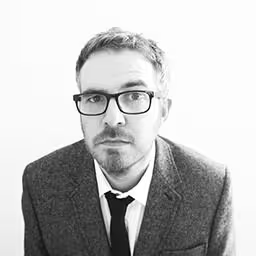
Simon is a designer based in Nottingham, now in his sixth year with product studio Fictive Kin. An early web standards advocate, he's written several design books, spoken at events all over the world, and organised the much-missed New Adventures events. Simon is currently exploring the ways digital technology can have a beneficial impact on our happiness, particularly where it encourages us to go outside, discover nature, and helps broaden our knowledge of the world around us.
Talk: Notes from the Edge
Craftsmanship and communication are at the heart of everything we do on the web. With our ability to understand and overcome challenges, we should deliver engaging experiences without compromising our integrity or failing the end user. Still, we're often naive and we make the same mistakes over and over. We get hung up on our tools and confuse our goals. It's time to think and talk smarter, get our priorities straight, and learn from our mistakes.
Transcription
Marc Thiele: And one of these great people is Simon Collison, who’s giving you 45 minutes and an awesome talk.
[Applause]
Simon Collison: Good morning everyone. Well, good afternoon everyone. It’s my time of day now – don’t do the AM very well.
No disrespect to Marc, but the pronunciation of Collison is Collison and not Collision. And the only reason I mention it is because collision is a very different thing. I sometimes see my name before the BBC corrects its headlines. I might see something like “Collison kills six on the M1” and these kind of things.
[Laughter]
I’ve got a wonderful collection of screen grabs of those kind of things.
Also, anybody out there who doesn’t have their own conference?
[Laughter]
No hands, okay. You understood that that was rhetorical. Excellent.
Okay, so today I’ve packed in a lot. I speak quite a bit. I’m usually pretty good at my timings. I will still come in on time, but I’ve packed in as much as I can. If I start to speed through a few things, it’s just because I wanted to share quite a lot with you.
Today, what I’m going to do is look at us – me and you – individuals building the wider web.
This is quite broad brush strokes, really. I’m a designer. I care about the details. I could easily do a talk that is about the nuances of design, very fine details and so on, or something quite practical. What interests me at the moment is how, as an industry, we’re becoming more mature.
I don’t like this idea of the web being young. The web’s a good 20 years old or so. It’s gone past that sort of awkward teenage goth stage, and it’s very much become an adult, I think. Along with that, we as practitioners are taking what we do even more seriously than we ever did.
To get the best out of that, I think it’s useful to hold a mirror up to ourselves and look at how we go about what we do, and also how each of us can play a role in taking the web forward.
Come on, magic wand. Oh, that’s coming out. There you go.
[Laughter]
Read the manual, Collison.
There we are, thank you. I completed that, got a whoop. You’re a good bunch.
Bricks
So first and foremost, I want to do a little bit of history, a little bit of personal history, and I want to briefly talk about my ancestors. And when I think about my ancestors, I think about bricks.
I’m not going to talk about my mother’s side of the family, because they were a bunch of rogues, dossers, losers and, as you can see here, champion badger baiters – which is a very strange thing. Essentially, they would send those dogs down holes to rip badgers and foxes into pieces, and get cups for it. So let’s not talk about them.
I want to talk about the Collison side of the family briefly. And I have a mad cousin, a crazy mad cousin, who has nothing better to do than go on ancestry.com and every other resource out there. And weirdly, for an ordinary family – we are a very ordinary family – she’s traced us back to 1450, to a man called Thomas Collison. And his surname was actually spelled C-O-L-L-Y-S-O-N. And he was a brick maker in Suffolk in England, which is a wonderful, brilliant skill.
And then fast forward 300 years and the line stays pretty much the same professionally. So my ancestors became bricklayers, making things with bricks. Right up until this man here, which is my great-great-grandfather, Francis Collison. A very serious looking man with a very serious beard. And also, as you can see, pretty knackered hands. This man has laid a lot of bricks by the time this photograph’s taken.
So he was one of many sons of John, who was a bricklayer. Francis had sons; they were all bricklayers. And his son Samuel, my great-grandfather, he went into the army, then he was unemployed for a while, then he became a bricklayer. So you kind of get the picture.
This lineage fascinated me. I was really excited to discover this. There were no lords or royal blood or anything in my family, thankfully. But I loved this idea of making, of building, throughout my family lineage. And I started to look at parallels in terms of what I do and where I’ve come from, and how this might inform my principles.
Class is a big thing in the UK, and I’m from a very working class family. That shifts now, I think, in terms of what I do and how I live, but I’m very proud of these principles and roots.
And bricklaying itself is a really interesting job through history. Through bricks, we see the anonymous traces of humans leaving traces of themselves in inanimate objects, and the cities and towns that we live in.
Goals and destinations
So with that in mind, over the last year or two, I’ve been thinking about and writing about what we do as individuals. And as part of workshops I do, people ask me to do quite sort of motivational things. Not team building, thankfully. No idea what we do with that. I’ve never done a camping workshop and I never will.
But what fascinates me at the moment is this idea of goals and destinations. And we are trained, through school and so on, to have goals and destinations in our careers. And that’s fine, but I think it can be a little bit dangerous.
I’m very fortunate that from time to time people ask me to do interviews and different things. And any of you who’ve been for a job interview, as I have in the past, will probably be familiar with a question such as this: what do you think you’ll be doing in five years’ time?
That question is that. To me, that is ridiculous. Incidentally, if the Occupy movement has any worth to it, let it at least be that photograph, which is wonderful.
The idea of what will I be doing in five years’ time, what will you be doing – there’s an inherent impossibility in that, to me. I find that very difficult to deal with. I now have a pretty much stock answer, where I just say, I’m not interested in what I’ll be doing in five years’ time. I’m just going with what I’m going with and seeing what happens.
I’m much more interested in the doing – actually doing what I do, and seeing what happens and what opportunities come my way. And I was just the same when I was trapped in employment, perhaps, or when I was running my own agency. Yes, I’ve got ideas of what I might want to do in the future, but what interests me much more as a creative person is that I can wake up each day, do good creative work, and see where it takes me.
And when you think about the web as part of that, and the industry that we work in, that’s particularly useful as a kind of guiding light, because how can we say what we might possibly be doing? Five years ago, did any of you have any idea how the iPhone or the iPad or mobile devices would really change the way we work? That you might become iPhone developers? That you might care as much about a 320-pixel-wide screen as you do the desktop? Some of you maybe; most of us, no.
And these wonderful things happen to us in this industry, and we need to be ready to take those forks in the road.
I like to consider what the act of actually making means to us. And I’m always kind of conscious about whether I myself am in the work I produce. And I think it’s useful for all of us to ask ourselves: are we in our work? Are you in your work?
We work in an industry that’s full of rules. There are lots of things to adhere to. Many of them I embrace, you embrace. We think about end users, and we think about people using the products that we create. And that’s really important. There are many rules and things we should adhere to – meaning and perception, what science tells us about how people perceive information, general kind of principles around communication, and then of course certain things that we need to consider regarding the actual devices and tools and so on that we use.
But at the same time, we are creative people. Whether you’re a developer, a designer, whether you run a communications team or you represent a business, if you’re here today you must in some way be creative. You must in some way be giving a damn about the kind of stuff you put out into the world. And it’s perfectly possible for you to impose yourself in that work. If it’s a particularly serious client job, at least you can take that as far as you can. There may be limits further down the road. But it’s about you imposing what you know and what’s unique about you into the work you do every day. I think that’s really important.
There’s an American stand-up comedian, this guy Patton Oswalt, who sums this kind of idea of doing up really well for me. He says, “It took me until my 40s to realize it. There’s no destination. There’s no getting anywhere. There’s just the going. The key to life is to make the going really fun. Because people are like, if I just get to this and boom – and then they get there and there’s this dawning of an afterwards.”
He carries on: “I cannot do anything for weeks or months if I need to. And just sit and read books and watch movies. I’m just as fine consuming and absorbing new art as I am trying to make it. It’s all in the going.”
I couldn’t agree more. It’s at odds with this established notion of setting goals for ourselves, which often end in disappointment. We also set goals for the person we are when we set them, not the person we might be when we would like those goals to actually happen for us.
Sometimes nowadays I like to just take a break from what I’m doing, step out of it for a while, and let the ivy grow over me a little. Look around me. See what influences me. Rest and come back to my work.
I was reminded of a breakfast conversation I had with this chap, Dan, who’s here today, and a chap called Frank. Frank summed up what we were talking about very eloquently, as he does. Referencing the conversation, he said, “We didn’t necessarily talk about slowing down, but just rather opting out of speed.”
I loved that. I took that in a different way, perhaps, to what he thought, but for me that was about stepping away from this mad rush towards all these different goals or achievements I wanted to have, and just caring more about my work, the making, the doing, and seeing where it takes me.
Ultimately – there’s a couple of laughs there. Andy Goldsworthy’s wall, wonderful man. Ultimately, I think it’s about serendipity.
If you’re willing to embrace serendipity in this industry, this wonderful, crazy ebb and flow industry that we work within, then you’re open to all sorts of ideas. You’ll come to conferences like this, meet people, have ideas. I was talking to a chap last night with Jon Tan and somebody else – a guy I met for the first time yesterday, Stuart – and we’re already talking about building a certain, hopefully wonderful, little tool that we see a niche for. A serendipitous moment. We’re going to try and make time to make that happen.
Strengths and values
A few things that I think are really important as part of this: holding a mirror up to ourselves, and understanding how we do what we do, why we do what we do, and ultimately why it benefits the wider web.
One of those things that I keep coming back to, at least for myself, is the idea of my strengths and my values. I think this is true: to progress and to create work of substance, or even greatness, hopefully, we each must start by knowing our values, our strengths, and the level of expertise we seek. I do think that’s really, really vital.
Sometimes what some might perceive as our weaknesses can actually be spun into strengths. Thomas Edison here – I absolutely adore this quote. He says, “I have not failed 700 times. I have not failed once. I have succeeded in proving that those 700 ways will not work. When I have eliminated the ways that will not work, I will find the ways that will work.”
Brilliant. Remember that in the next difficult client conversation. Absolutely essential piece of kit.
I don’t think weaknesses are defined by failure. Failure is an essential component of success. Weaknesses, I think, are quite simply things we’re just not good at. Just things we can’t do.
There are many things I can’t do. There are many things many of you can’t do. We can’t do everything. And I think if we understand that some things we’ll just never master, and we just let them go and never give them another second’s thought, we can move on much more purposefully with our strengths, principles, and the things we really do value.
I think our strengths usually find us. How many of you in this room – can’t really see you – how many of you in this room are trained web designers?
Not many.
And even if you did a course of some kind, maybe some kind of Dreamweaver certification thing, whatever they are, I don’t know what they are. Brilliant. It might even have been taught by an excellent lecturer, and there are many. There are great people in our industry who really care about education. But things move so fast, things become out of date.
So most of us probably discovered web design by accident. I remember reading the Rough Guide to the Internet in 2000 when I got my first computer. Never looked at a website before the year 2000 at all, I swear. There were four pages of HTML and I played with it, and I made a page linked to another page, and it blew my mind, and it was dead simple. I wasn’t playing with a style sheet or anything. I was just doing all this inline crazy madness that I’ll go to hell for. But it was incredible, and that was my introduction. And I realised over a few months this could become a skill, this could become a strength – and it’s informed the last decade of what I’ve been doing.
I really like this suggestion from a few voices that on the web we are 80 percenters. So in other words, we need to be good, around about 80 percent good, at a number of things. What’s unique for us and all the things we have to care about is that that can make us 100 percent good as a web designer or a web developer. It may look a little bit more like that, but you get the idea. And I love this idea.
As part of that process, we need to learn to understand and identify what our strengths are. What is it in particular that you’re good at? I hope – I think mine is designer. I can also write a bit. I’m not very good at project management. I’d go so far as to say I’m absolutely shit at it. If you work with me, I apologise in advance.
[Laughter]
But we identify something in particular. That becomes our thread, that becomes our strength, our core skill. But we all know we need to juggle a lot of plates on the web. We have to be aware and understand many other things.
I collaborate quite a lot these days on projects. And I work with people who have different skills to me quite often. I don’t need to know all the ins and outs and all the details of what they do. The Rails developer, the PHP developer – in fact, I really don’t want to talk to them about PHP, because they’d realise just how bad I am at it. The content strategist.
I need to know enough. I want to know enough to help me collaborate with them. I want to know their limitations. I want to know how far I can push them. They want to know how far they can push me. But if I try and be an expert at all those different things, I’m inevitably going to end up mediocre in some of those areas. And I don’t want to be a mediocre Rails programmer.
It’s the same reason I always forward logo requests on to specialists. I’m not a brand and identity expert. I understand how to bring that to the web. Don’t ask me to create a logo. I’m mediocre at creating logos.
Learning
Learning. Of course, we’re always learning. Whether professionally, whether from trusted sources on the internet – A List Apart, Smashing Magazine, whatever we read – whether it’s from real life occurrences and happenings and conversations. I’ve learned a ton in the last 24 hours. From people standing on this stage, and also from conversations with people I know or have never met before. Constantly learning.
One thing that’s absolutely frustrated the hell out of me for probably the last five or six years is how much I felt I needed to learn. On the web, there’s a tsunami of stuff coming all the time. Opinions change almost weekly. It’s my job to try and keep up with that, right? But it becomes overwhelming. We stack up all this Instapaper stuff, all these books we know we should read, and that information becomes useless.
Over the last year or so, last year and a half, I’ve been trying to learn to deal with this – to get rid of this anxiety around all this learning, to stop worrying about feeling that I’m falling behind. I used to be, I guess, some kind of CSS expert in 2006, which doesn’t mean anything now, because I started to fall behind. CSS3 I was pretty much kind of useless with. It’s taken me a long time to catch up, because I was running a business and I lost track of all that stuff.
We need to be pragmatists on the web in terms of how we learn and what we gather around us. Jon Tan here summed it up very well in a recent article. Jon said, “I’m self-actualised. Without the stamp of approval from any guild, curriculum, authority or academic institution, I’m web-taught, colleague-taught, empirically taught.”
In a few things I’ve written recently, and been really kind of trying to research why I’m improving my learning or starting to get a handle on this better, I came across a wonderful article by a lady called Linda Holmes. It’s on the NPR network. Beautiful title: “The Sad, Beautiful Fact That We’re All Going To Miss Almost Everything.” And I read it and I went, “Whoa, that’s horrible.” And then actually I thought, “No, that’s beautiful.”
And I love this idea that we can navigate through all this stuff. Culturally, you’re never going to see all those films you want to see. You’re never going to read all the books you want to read. You can’t watch all the TV. Music – you’re going to miss brilliant stuff that might change your life. We have to navigate through that a certain way and collect what we want to collect.
Linda talks about these ideas of cull and surrender, two devices she uses to help her decide what she will essentially jettison and avoid learning about, and things that she will try and learn about.
I’ve jettisoned various concepts. I decided long ago not to care about elves and goblins and weird fiction like that. I decided not to become a big Lord of the Rings fan. I decided that it was okay to not understand what the universe was about, because it’s very big and it breaks my head. The end result is that the universe is simply made of magic.
[Laughter]
And if I get time in the future, I’ll probably read a bit more. I’ll take those documentaries a bit more seriously and I’ll try and get a handle on it. At the moment, I don’t need a mediocre understanding of the universe. I’d rather it just be magic.
So in terms of how we learn and how we take ourselves forward, I quite like this sort of idea of orbital learning. It’s a very simple concept with a very grand name, but essentially it’s about dictating what we learn, telling ourselves that we will or we won’t take ourselves forward in certain things. Saying it’s okay not to read every A List Apart article. Always be mindful of the stuff we absolutely must read and should read, the real kind of core guideline stuff. But if we all learn exactly the same thing, we all end up the same. And that can diminish the possibility of ourselves being in our work, of having that style, that influence, that creative edge that makes us different, that makes great work of substance.
Essentially, I think it’s about focus. And as I’ll talk about shortly, some of the best practitioners I’ve ever worked with, or met, or looked up to, or seen documentaries about, they have a specific focus. They’re aware of a broad spectrum of things, but they focus on a particularly narrow trough that they plough and that they particularly care about.
Focus down. I’m not going to read all of those books, and I think that’s fine.
Craft
Another thing I think is really important to us is craft. The idea of craftsmanship. I’ll say craftsmanship – I’m obviously referring to craftsmen and craftswomen, but that slows the talk down if I do that every time. You know I’m a nice guy, don’t tweet about that.
[Laughter]
The idea of craft is really important to me. Again, going back to bricks: brick making was a wonderful country craft around the 15th century. A wonderful brick historian, Mr Alec Clifton-Taylor, suggested that what most counts about bricks is their size. They just suit the human hand laying a brick. And a brick wall is an aggregation of small effects. It implies a human and intimate quality, and brickwork imposes a certain restraint.
Bringing this forward to craftsmanship: good builders, good bricklayers, would select the best bricks from the barges on the canals. They cared about the work they made. They cared about every brick they laid. And this was real craftsmanship. It reminds us that the evidence of the hand, the actual hand, is a good thing in products that we value – the uniqueness of handmade products or buildings.
There’s a wonderful book by this guy, Richard Sennett, called The Craftsman, in which he states that craftsmanship is a basic human impulse, the desire to do a job well for its own sake.
Now, I would hope that everybody in this room, whether they like the label or not, or whether they consider themselves craftsmen – you are, you should be. You got off your arses and you came to a conference, probably not the first one. You care about this stuff. You care about making meaningful, good work.
Sometimes I worry that the automation of certain things on the web robs us of some of this craftsmanship. I’m really proud, as many of you will be, that I learned HTML and CSS and so on in a text editor, not in Dreamweaver. And I learned, line by line, how to influence the work I was making. And it felt like craftsmanship. I push every individual pixel in Photoshop, or whatever I’m doing. When I look at grids and baselines and all these different things, it’s craftsmanship all the way.
And I sometimes worry that the more automated tools we use – for example, there’s a CSS3 automation website for every single CSS thing you can do, gradients, rotations, you name it. If we just copy and paste that code without having any influence on it and learning what it is, we’re not really mastering the craft.
I quite like to think of the office as the modern-day workshop. It might seem a bit pretentious, but I don’t care. Because every day I’m making and doing, and this becomes my workshop. And I think that’s a really nice philosophy. A place where we remember and exploit the satisfaction of making. It’s a mindset, getting ourselves into a certain frame of mind where we can genuinely create meaningful work.
Good craftsmen discover through doing. We hone our skills over a significant period of time, with substantial commitment. There’s some kind of rule that it takes 10,000 hours to master a skill. I’ve lost track of how many hours I’ve put into this thing, and I guess a lot of you have. But with all this work and understanding what we do, we become craftsmen.
Tools
When we think of craftsmanship, we think of tools. And tools are an essential component in making, of course.
Some of you may disagree, but I would argue that what we do is not about tools at all. What we do is a bigger thing. It’s about communication. It’s about reaching audiences. It’s about having a dialogue with people through that screen, through that device, whatever we use.
I think tools are the scaffold for what we produce. They are enablers. They help us bring our ideas to fruition.
Sometimes we lean too heavily on our tools. Sometimes we make schoolboy errors. We realise we can do a ton of wonderful things with CSS3, so we pack these interfaces with all these bells and whistles and incredible things, and we dilute the message, the communication. We lean on these things. We make work about CSS3. We make work about HTML. These are actually the scaffolds, the frameworks. They can help us push our ideas to new places.
I’d love to think that, robbed of these tools, we would still be able to communicate through design with audiences. We would find other ways.
I think your best tools – the best tool in the world is your brain, your experience, your courage and your conviction. These are the most important tools we have. And perhaps a laptop. That’s just for those of you who maybe wanted to tweet.
[Laughter]
I agree with Oliver Reichenstein, who says, “The tool doesn’t make the craftsman. Choosing the right tool for the right purpose is a technical purpose and a personal choice.”
Of course it is. What language are you going to build that website in? Rails, Python, PHP – your choice. How are you going to design that experience? Photoshop, with its limitations; designing in the browser, with other limitations. Each of them also have freedoms. These are your choices. Don’t let anybody dictate too much to you how you do these things.
I think we all need courage to go about the work in the way we want to go about it.
Creative inquiry
I think it’s a human desire to want to investigate, to explore what we do, to explore our craft, to know why things are the way they are. I think we transcend the mundanity of our tools in this way.
This brings me to inquiry – creative inquiry.
I often consider what makes great designers great, great practitioners in any industry great. I think they have this need to inquire beyond the necessary, beyond the obvious, to look at things differently and bring different influences back into their work. I think we become especially interested in things we can change or influence, and there’s a long history of that on the web.
I just want to tell you a very quick story. Some of you will recognise this chap, Jason Santa Maria. He’s quite a good designer. I was very fortunate to work with him on a brief job. I thought I was pretty good at the time, a couple of years ago. I thought, yeah, I’m on this job because I’ve got some merit, I guess. Then I worked with Jason and I realised I had a lot to learn. This is why I’ve been investigating all this stuff.
We were working with a big client. We were all in a basement. We listened to the client for four hours. We looked at a lot of spreadsheets and a lot of pie charts. Our brains started melting out of our ears.
Then we had a breakout session where we would respond to all this stuff to get the project started. There were lots of designers in that room who I admired and was really interested to see what they would do. Like many of them, I was stuck to my laptop. I did a few sketches in a sketch pad and a few bits and pieces like that.
I became very aware, very quickly, of Jason, who had taken these provided Post-it notes – A2 or A1 size, huge sticky-back sheets – and he wallpapered one wall of this office, this room. He’d got a load of Sharpies and other markers, and he just drew his way along the wall, all the way, just drawing. Hardly any words. He was finding patterns. He was looking at starting points. He was embracing this kind of visual language.
At first glance, it looked almost arrogant in a way. What’s he doing? How’s that helping? What’s that? Idiosyncratic, kind of odd.
Then when we reconvened and we fed back what we’d all done, and we all humbly went, “Well, I’ve been doing this and, yeah, it might help.” “Well, I’ve done that.” Then Jason explained what he’d been doing, and it was actually incredibly vital. He eloquently articulated what he’d been doing. As he walked us through it, we found we had all these wonderful starting points. He’d literally just poured this stuff out of his head.
But what I realised was, he’s reached a level of experience where he’s learned so much in a particularly kind of narrow line of inquiry. He’s drawn on a number of influences. He’s understood visual language, the basics of graphic design, of print design and all these things. Then he’s almost learned to forget them, so that now when he responds to a problem, he responds instinctively without thinking about these rules. He’s simply armed to deal with these difficult situations. It was a wonderful experience.
Since watching Jason, I’ve kind of reevaluated all these things I’ve talked about. I’ve looked again at my strengths and values and principles.
My starting point was visual grammar, which is an entire huge subject which I won’t get into today. But essentially, with visual grammar we’re talking about real design communication basics, graphic design basics, good tools for any web designer. We’re talking about things like line and point, structure, form, movement, repetition – this wonderful language, this alphabet that informs all great work of substance: film, TV, art, music, design, web design.
It’s kind of born out of that wonderful modernist stuff – the Bauhaus on the left here, Swiss design, economy of use, simplicity, understanding the tools we have and getting great stuff out of them. These are just periods. These are just lines and dots, amplified to change their relationship with their containers, to deliver a certain kind of message that’s immediate and strong.
So I’ve been on this voyage of kind of relearning stuff that I should have learned at art school, but I was mostly hungover and ignoring lectures and other things.
[Laughter]
But it’s been a wonderful journey for me, and my line of inquiry has shifted and changed and become more pointed. And I’ve started trying to use this kind of information to help me understand why websites do or don’t work for me. That thing where everybody and their dog links to a new website, it’s amazing. And you see it, and if you’re like me, instantly you know whether you like that thing or not. And often you can peel a layer back – the composition and the balance and the shapes and the symmetry, the quality of line, the colour use, all these different things, they’re all competing, all working in harmony to make something work or not. They can help us evaluate work.
So this line of inquiry, this need to investigate, it stops us being drones, for one thing. It stops us simply being people who do this job day in, day out. Client job starts, has a middle, ends; next one starts, and you’re just moving through this production line. That doesn’t make us rich designers or developers, and that doesn’t help anyone, or certainly doesn’t help the web grow stronger.
Milton Glaser here – wonderful, strange old chap. I love this quote. He says that a puzzle is better than an answer.
It took me ages to realise that. Why aren’t these jobs easy? Why do I have to pretty much organise this organisation, because they’re not organised, so I can build a website for them? Why am I having to ask all these questions? Why am I spending so much time trying to get my head around all these problems?
Actually, I realised that it was a wonderful thing, because it gives us so many points of influence. You bring that to the web, and the specific uniqueness of the web, and we have this whole other playground to investigate – which I’ll come to.
Sharing
Essentially, the web as we know it has been built on sharing, and I think that’s one of the strongest things we’ve got, and long may that continue. I talk to people in graphic design and architecture and other disciplines. They don’t talk to each other. They don’t share their findings. We have spent ten years or more trying stuff out, labouring away for two or three months, making something work, and then giving it away for free.
We do that because ten other people will do that the same day. We do that, and we roll forward, and the web gets stronger. This wonderful, brilliant sharing that we have. This is where web standards came from, this shared desire to make things better. This all comes from caring about principles, our individual strengths, using these to take the web forward.
The unique web
I must speed up a little bit. So this brings me to the unique web, and I’m going to conclude with this. A few points of interest where my line of inquiry is going now, and others, and things that I think really matter in how we take the web forward.
I’m just going to briefly talk about the frame – the frame of reference. This term’s been around a long time. We’re talking specifically about the window that we look through, the frame. On the web, this is everything, including the browser chrome. Everything we look at is contained within a frame.
Greg and I in Christmas jumpers. The frame of reference is not the bit within. It’s the big ornate gold frame too. It’s even part of the projector screen.
Painters have used this for years. Howard Hodgkin here, wonderful English painter. One of the many things he’s known for is using the frame. He finds these old frames, and he paints all over them. He’s very expressive. He takes it out of the constraint and tries to do something different.
Now, with the web, we have a particularly unique thing. Our frame of reference is a fixed point, and the content can shift around within that. Now, that is an amazing thing. That’s unique to us, pretty much. You could argue film has some parallels, but that’s wonderful. This is something we can begin to exploit, and I would love to see us exploit more.
When it comes to scrolling, this is a concept that’s pretty much ours too. Through history, we’ve had the scroll. Scrolling comes from these things. This is actually a diagram from the 1984 Macintosh manual. It was such a new concept, they had to explain it, had to draw a diagram. You could argue they’d have to do the same thing for Lion, but that’s another story.
[Laughter]
We work off something that people understand and know and use. In reality, scrolls mostly used to actually work horizontally, but we don’t like horizontal scrolling. We don’t like that.
What I’d love to see – this is a couple of years old now, Browser Ball – but I’ve been fascinated just with any opportunity we can take to break the rectangle, to break the frame. When I first saw that, that really broke my head in half, because yes, this is really basic, but bloody hell, that’s more like it. It’s kind of, let’s be a bit more playful.
It’s weird how much was actually achieved by 2001 with Flash. Don’t boo, but Flash, you know? We achieved amazing things with Flash – great interactive, wonderful experiences. Now we’re starting to come back to that again. Saw some good examples yesterday where we can get really playful like this, where we can break the browser chrome to a degree. But I don’t want to just go full screen. I want to see us really go out there and impress the other industries who think all we do is functional, boring work.
You go to the pub. “I’m a web designer.” “Are you? Right.” Nobody cares. And yet we’re building all the stuff that is binding society, that everybody on TV is driving people to. Go and log on here, go and do this online. Everything’s online. We’re building that. We can make it really interesting.
A few years ago at Erskine, we built this Wallswaps thing, and this is just before the iPhone. And we loved the idea of having this canvas that you could move around within the frame. It’s a really fun thing to do.
We’ve obviously seen a lot more of this stuff now. There was a wonderful Arcade Fire one, The Wilderness Downtown, with its use of multiple windows. Absolutely killed your computer. But it was a wonderful thing. And then obviously we’ve seen things like this kind of crazy vertical parallax scrolling madness, Nike Better World being one of the first and one of the best. Storytelling through this kind of technique is really powerful.
Systems
Running out of time, Collison. Told you I would.
I want to talk briefly about systems, because I think this really taps into the idea of craftsmanship and how we plan for the future. Andy Clarke, at @media two years ago, said, “We don’t design web pages. We design systems.”
What a wonderful, brilliant, intelligent way of looking at what we do. If you design a donkey sanctuary website, you probably are doing pages. Home page, about page, contact page, page for all my donkeys. But if you’re designing really serious, big, living, breathing, scalable experiences for big organisations or whatever, we have to be able to prepare for what’s coming around the corner. We just don’t know. Did all our work suit the iPad and iPhone immediately when they came out? How scalable was it? How much work did we have to do to make those things responsive? We need to think holistically and carefully.
And it’s about making use of really strong systems, pattern libraries, ideas where we can prepare for whatever comes next. If an organisation says, “Hey, we’ve got this whole new department, they need a section of the website” – how are we going to prepare for that? Do we have colours in place? Do we have the tools in place to roll that out effectively and swiftly?
Something I’m working on at the moment with Greg, a music site. We built all these systems. We put all these things in place, all the form elements we need for the crazy detail of this thing, long before we ever actually started designing the pages – because we don’t design pages. This helps us roll out things like this more effectively. It helps with editorial design or art direction. It helps us get contextual designs out there more effectively, because we have systems in place that can act as a good scaffold for our ideas, to give context to what we write.
Vocabulary
Almost done.
If we care about what we do, we want to make the web more meaningful. We should care about vocabulary. We should care about how we talk to each other about the work we do, to our clients and to the wider world. This can help us communicate more effectively, get our ideas across in a much better way.
Think of something like responsive web design. I was talking to Aaron about this yesterday, and he wrote a book called Adaptive Web Design. Ethan wrote a book called Responsive Web Design. These are two very complementary books. Aaron’s has a great focus on progressive enhancement, as you heard yesterday.
But this terminology is really useful to us. We update stuff like liquid and elastic and all those terms. We’re starting to get more refined. What I loved about responsive web design as a term was that it was very eloquent. It spoke to us immediately. Overnight, we understood what Ethan was saying. He gave us a term and a way of speaking about a particularly unique part of what we do that we could move forward with and embrace. And I’d love to see more of that. I’d love to see us smartly define more of these terms. Getting more serious, getting more mature about what we do. It’s not about writing a dictionary, but it is about identifying unique patterns and running with those, and sharing those.
Motivation
So, to conclude: our motivation.
Very briefly, this is a guy called Ian Breakwell. When I was an art student, my art teachers hated me. I was doing work that was at odds with what they thought I should be doing. They thought it was dull. They didn’t like it. I didn’t really care. This guy was a visiting lecturer. He came into the studio one day. He was the most famous person I’d ever met at the time.
He listened to me. He made notes. When I’d finished, he turned to me and he said, “You should really enjoy the fact that what you’re doing is at odds with what everybody else is doing.” And I loved that. Then he gave me some notes and some bits of information. He told me to go forward with those, and it was really helpful.
After he passed away a few years ago, there was an obituary in The Independent back home. As part of that, it described this man, Ian Breakwell, as somebody who saw the extraordinary in the ordinary. That’s a very obvious kind of cliché phrase, but I loved it. I don’t think he was referring to me, but this is how this man saw the world. He found unique things. He found interesting things, and he followed them and pursued them. He made great work out of it.
So where does all this bring us? I think it brings us to a better idea of a wonderful philosophy for a designer or a developer, a web practitioner.
It was interesting with the Industrial Revolution and bricks. Suddenly bricks were being mass produced, machine made. They were even making bricks with fake handmade traits in them. Fake hand. The idea of honest brick became lost.
But craftsmen find a way. They started using bricks in new and innovative ways. And every industry faces this kind of problem, where craftsmanship and traditional methods suddenly have to come hand in hand with technology. And that’s something we faced on the web. Traditional design through new tools and new ideas. The two need to stand side by side.
So I think ultimately we need to be very mindful of what we do, and be very responsible for what we do. Remember, there aren’t usually definite answers in what we do. We find problems, or we’re given problems, and we design responses. Not answers, not solutions – just responses, from us as individuals. I think that’s really important.
We need to learn the things we need to learn for ourselves. Take those forward. Grow. Investigate. Examine what we do. Care about what we do.
And I think the future belongs to the few of us – everyone in this room and beyond – willing to get their hands dirty. Willing to do more with what we do. Willing to really care. We all want to create more meaningful work with a long shelf life, and ensure it survives and lasts, flexes and grows.
But above all, we have to care. And I mean really care. Let’s not be lazy. Building the web isn’t a job. It’s a craft. It’s a motivation. It’s a need to make things better. And if that doesn’t sound right to you, then just stop and do something else.
I think we’re each of us bricklayers. Brick by brick, we are building the web, leaving a trace of ourselves on the web. And I think we should make every single brick count.
And with that – I’ve run over a little, so thanks for your patience. Thank you.
[Applause]